
Iroquois County Genealogy Lookup
Iroquois County genealogy records are kept at the county clerk and recorder office in Watseka, a small town in eastern Illinois near the Indiana state line. Searching for family records here comes with a challenge that most other counties do not have. A fire on October 16, 1866, destroyed the Iroquois County courthouse and wiped out roughly 18 years of early records. That gap affects genealogy research for families who were in the county before the fire. Records after 1866 are in good shape. The clerk holds vital records, land files, and marriage licenses, and the IRAD depository at Illinois State University in Normal preserves older Iroquois County government documents.
Iroquois County Genealogy Quick Facts
Iroquois County Clerk Records
The Iroquois County Clerk and Recorder is at 1001 E. Grant St, Room 104, Watseka, IL 60970. The phone number is 815-432-6960. This office holds birth, death, marriage, and land records for the county. Birth and death records generally start around the late 1870s, following the Illinois statewide pattern. Marriage records and land files begin after the 1866 fire, since most earlier records were lost.
The 1866 fire is the single biggest obstacle for Iroquois County genealogy. On October 16 of that year, the courthouse burned and took with it about 18 years of records. If your family was in Iroquois County before that date, the county clerk will not have records from the pre-fire period. You may need to search state-level resources, church records, cemetery records, or neighboring county files to fill in the gap. After 1866, the records are intact and the clerk can help you find what you need. The Counties Code (55 ILCS 5) names the county clerk as the official keeper of vital records in Illinois.
Walk-in visits to the Watseka office let you search indexes and order copies the same day. Mail requests work too. Include the full name, any dates you know, the record type, a check for the fee, and a copy of your photo ID. Make checks payable to the Iroquois County Clerk.
| Office | Iroquois County Clerk & Recorder |
|---|---|
| Address | 1001 E. Grant St, Rm 104 Watseka, IL 60970 |
| Phone | 815-432-6960 |
Iroquois County Fire and Lost Records
The 1866 courthouse fire is a defining event for Iroquois County genealogy. About 18 years of records went up in flames. That means marriage licenses, land deeds, court files, and any early vital records that existed before October 1866 are gone from the county's collection. For researchers tracing families who settled in Iroquois County during the 1840s and 1850s, this is a real problem. You will not find those records at the clerk's office.
There are ways to work around the gap. The Illinois State Archives in Springfield has free online databases that may include Iroquois County entries from before the fire. The statewide marriage index covers 1763 to 1900 and pulls from sources beyond just county clerk files. Census records, church registers, and cemetery headstone transcriptions can also fill in facts about families who lived in the county during the lost period. Federal land patent records are another option since they were kept at the federal level and were not destroyed in the county fire. If your ancestor bought land from the government, that record survives.
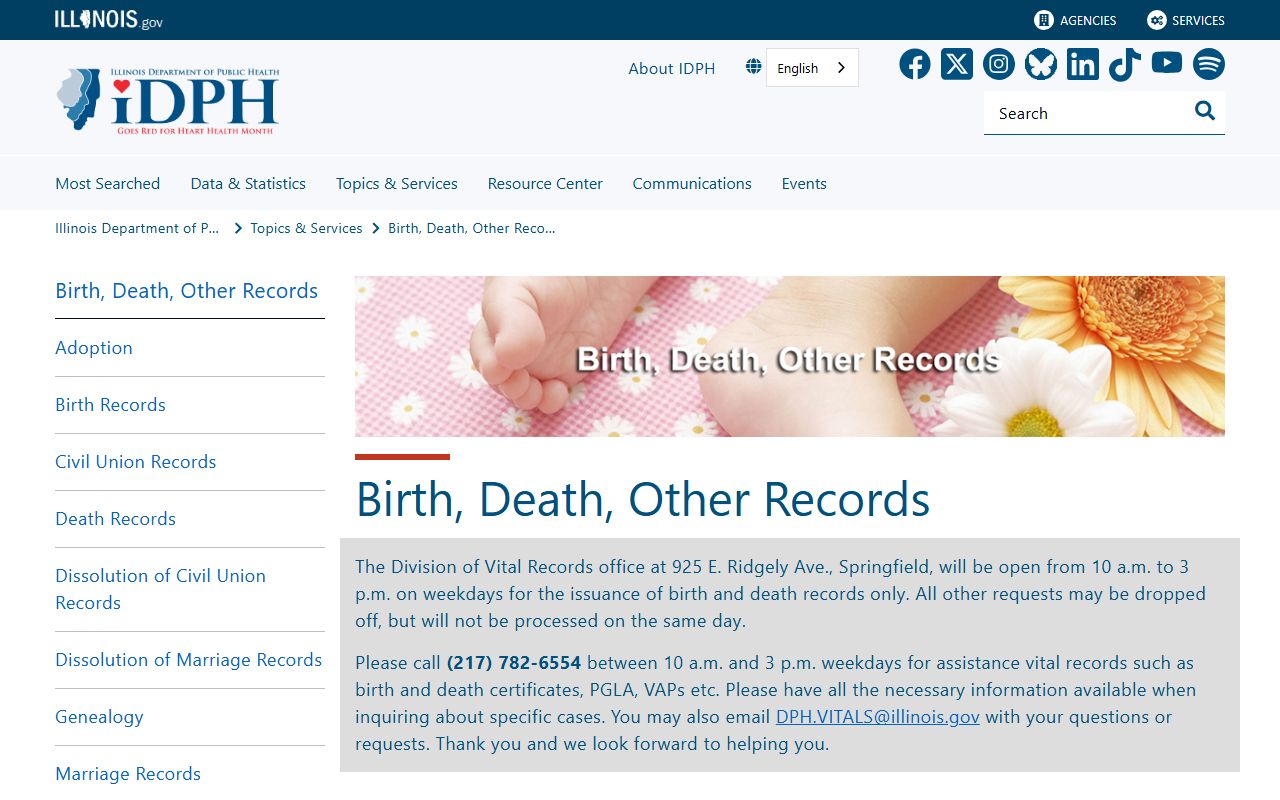
The IDPH vital records page above covers the state-level holdings from 1916 forward. For Iroquois County records before 1916, the county clerk in Watseka is the source for post-fire documents. Pre-fire records require alternative sources.
Iroquois County Genealogy at IRAD
The IRAD depository for Iroquois County is at Illinois State University in Normal. Call (309) 452-6027 to check what Iroquois County records they hold. IRAD stores historical government documents that counties transfer for long-term preservation. For Iroquois County, the collection starts after the 1866 fire since the earlier records were destroyed. Court files, probate records, naturalization papers, and other county documents may be at the IRAD location in Normal.
Research at IRAD is free and open to everyone. You can photograph documents at no charge during your visit. Staff accept mail and phone requests with a limit of two names per request. The IRAD holdings database lets you search what Iroquois County records are stored at Illinois State University. Check the online inventory before you drive to Normal. The Local Records Act (50 ILCS 205) is the law that created the IRAD system and protects county records from being discarded without proper review.
Searching Iroquois County Records
For post-1866 records, start with the Iroquois County Clerk in Watseka. The clerk can search by name and date range for vital records and land files. For records from 1916 forward, the Illinois Department of Public Health holds statewide birth and death files. IDPH genealogy requests go by mail and take roughly 12 weeks. The state fee is $10 per copy.
The Vital Records Act (410 ILCS 535) controls when genealogy copies are available. Birth records open 75 years after the birth date. Death records open after 20 years. Marriage records after 50 years. The Freedom of Information Act (5 ILCS 140) covers public records in general, but vital records have their own stricter rules that take priority.
- Iroquois County Clerk: post-1866 vital and land records
- IRAD at ISU: historical government records from the county
- Illinois State Archives: free marriage and death indexes online
- IDPH: statewide birth and death from 1916 by mail
- Federal land patents: not affected by the 1866 fire
Note: Records before October 1866 were destroyed in the Iroquois County courthouse fire and are not available from the clerk.
Nearby Counties
Iroquois County sits in eastern Illinois along the Indiana border. Families near the county lines may have filed records in these neighboring areas. If your Iroquois County search hits a dead end, try the counties around it.