
Gallatin County Genealogy Search
Gallatin County genealogy records are held at the county clerk's office in Shawneetown, a historic town in the far southeastern corner of Illinois along the Ohio River. Gallatin County was established in 1812, making it one of the oldest counties in the state. With only about 5,000 residents today, this is one of the smallest counties in Illinois, but its early settlement history makes it a rich source for genealogy research. If your family passed through Shawneetown or the salt works that drew early settlers to this area, the clerk and the IRAD depository at Southern Illinois University in Carbondale are the two places to search.
Gallatin County Genealogy Quick Facts
Gallatin County Clerk Records
The Gallatin County Clerk is at 484 Lincoln Blvd E, Shawneetown, IL 62984. Call (618) 269-3025 for record questions. This is the primary office for birth, death, marriage, and land records in Gallatin County. Birth and death records start around the late 1870s. Marriage and land records go back much further, reflecting the county's early 1812 founding date.
Gallatin County was one of the first counties organized in what is now Illinois. Shawneetown was a major entry point for settlers heading west. The town sat along the Ohio River and had salt deposits that attracted workers and their families from across the region. That early settlement means Gallatin County may hold records for families who later moved deeper into Illinois or further west. Marriage records, land transactions, and court files from the 1810s and 1820s can place an ancestor in Gallatin County during a time when most of the state was still frontier. The Counties Code (55 ILCS 5) names the clerk as custodian of these files.
With just 5,000 people in the county, the clerk's office is small. Phone calls tend to get answered quickly. Mail requests may turn around faster than at a busy urban courthouse. Send the full name, dates, record type, your check, and a photo ID copy to the Shawneetown address.
| Office | Gallatin County Clerk |
|---|---|
| Address | 484 Lincoln Blvd E Shawneetown, IL 62984 |
| Phone | (618) 269-3025 |
Gallatin County Genealogy at IRAD
The IRAD depository for Gallatin County is at Southern Illinois University in Carbondale. Call (618) 453-3040 for hours and holdings information. IRAD stores historical Gallatin County government records that were moved out of the Shawneetown courthouse. Given that Gallatin County dates to 1812, the IRAD collection could hold some very early documents. Older vital records, court files, probate cases, and naturalization papers are among the types of records that IRAD preserves.
Research at IRAD is free. You can walk in, browse the files, and take photos at no charge. Staff handle mail and phone requests, limited to two names per request. For a bigger project, plan a trip to the Carbondale campus. The IRAD holdings database on the State Archives site lets you check what Gallatin County records are at SIU before you visit. This saves you time and lets you focus on the files that matter most.
Probate records are a strong tool for Gallatin County genealogy. Early wills can name every heir. Estate files describe property and debts. For families who worked the salt mines near Shawneetown, probate and court records may hold details that no vital record ever captured. The Local Records Act (50 ILCS 205) created the IRAD system and requires counties to preserve records with long-term value.
Note: Gallatin County's 1812 founding means IRAD may hold some of the oldest county records in the state of Illinois.
Searching Gallatin County Records
Start with the Gallatin County Clerk for local files. For state-level records from 1916 forward, the Illinois Department of Public Health holds statewide birth and death records. IDPH requests go by mail and take about 12 weeks. For Gallatin County records before 1916, the clerk or IRAD at SIU are the only sources.
The Illinois State Archives has free online databases. The statewide marriage index covers 1763 to 1900. That start date of 1763 is key for Gallatin County. The area was settled by French traders before American control. Any marriage records from that era would show up in this index. Death indexes cover pre-1916 records and a separate set runs from 1916 to 1950. These are free tools you can use from home.
The IDPH genealogy page explains how to get state-level records by mail.
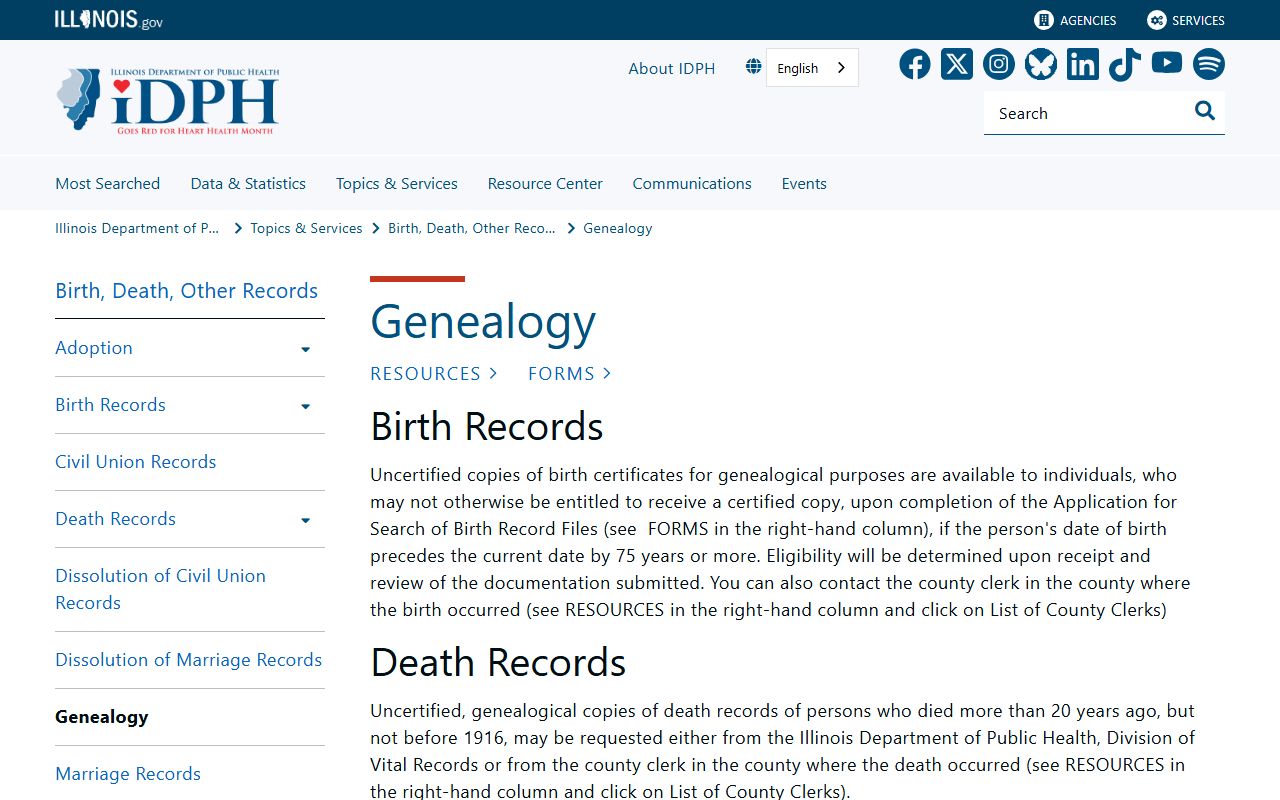
The IDPH page covers birth and death records from 1916 onward. For Gallatin County records older than that, the local clerk in Shawneetown or the IRAD at SIU in Carbondale are where you need to search.
Gallatin County Record Access
The Vital Records Act (410 ILCS 535) controls when records open for genealogy use in Gallatin County and statewide. Birth records become available 75 years after the date of birth. Death records open after 20 years. Marriage records are available after 50 years. Genealogy copies get stamped as uncertified. They are for research only.
The Freedom of Information Act (5 ILCS 140) covers general public records. But vital records follow the Vital Records Act, which takes priority. Recent files are restricted to those with direct legal interest. Records past the time limits are open to anyone for family research.
Gallatin County's deep history makes it a unique research site. Records from the 1810s and 1820s are rare in Illinois. If your family was part of that early wave of settlement along the Ohio River, the Gallatin County clerk and IRAD at SIU may hold files that you cannot find anywhere else in the state.
Nearby Counties
Gallatin County sits in the far southeastern corner of Illinois along the Ohio River. These counties border it. If your ancestor lived near a county line, records could be filed next door.