
Access Franklin County Genealogy
Franklin County genealogy records are kept at the county clerk's office in Benton, a town in southern Illinois. The county has about 37,000 residents and holds birth, death, marriage, and land records that follow the standard Illinois collection dates. If you are searching for family roots in the Benton area or the coal mining communities across Franklin County, the clerk's office is where you start. The IRAD depository at Southern Illinois University in Carbondale preserves older government files from the county. Between the clerk and IRAD, Franklin County genealogy research has strong coverage going back to the mid-1800s.
Franklin County Genealogy Quick Facts
Franklin County Clerk Vital Records
The Franklin County Clerk is at 200 Main St, Benton, IL 62812. Call (618) 438-3221 for record questions. This office handles all birth, death, marriage, and land records for Franklin County. Birth and death records start around 1877, matching the standard Illinois collection date. Marriage records go back further, to when the county was first organized. Walk-in visits give you the fastest results. Staff can look through the indexes and pull what you need on the spot.
Franklin County was one of the original Illinois counties, created in 1818, the same year Illinois became a state. That long history means the clerk holds records that span over 200 years of local life. Land records from the earliest settlement period are especially valuable for genealogy. They can show when a family arrived, where they settled, and who they dealt with in property transactions. Court records from the same era may also survive. The Counties Code (55 ILCS 5) gives the clerk custody of all vital records and defines the duties of the office.
For mail requests, send the full name of the person, approximate dates, the record type, a check for the fee, and a copy of your photo ID to the Benton address. Make the check payable to the Franklin County Clerk.
| Office | Franklin County Clerk |
|---|---|
| Address | 200 Main St Benton, IL 62812 |
| Phone | (618) 438-3221 |
Note: Franklin County was formed in 1818, so early records may predate the standard vital records start dates used by most Illinois counties.
Franklin County Records at IRAD
The IRAD depository for Franklin County is at Southern Illinois University in Carbondale. Call (618) 453-3040 to reach the archives staff. IRAD holds historical Franklin County government records that were moved from the Benton courthouse for preservation. This can include older vital records, probate files, court records, naturalization papers, and other local government documents with lasting research value.
Research at IRAD is free. Walk-in visits let you browse the records and photograph what you find. Staff take mail and phone requests but limit each one to two names. For a bigger research project, a trip to Carbondale is the way to go. The IRAD holdings database lets you check what Franklin County records are at SIU before you make the drive. Plan your visit using the database so you know what files are available.
Probate records at IRAD can fill in gaps that vital records leave behind. A will from the 1800s often names every child, describes property, and shows family connections. Estate inventories list debts and assets. For Franklin County families who were involved in coal mining or farming, these files can paint a detailed picture of daily life. The Local Records Act (50 ILCS 205) is the law behind the IRAD system. It requires counties to preserve records instead of discarding them.
Searching Franklin County Genealogy
Start with the Franklin County Clerk in Benton for local records. For records from 1916 forward, the Illinois Department of Public Health holds statewide birth and death files. IDPH requests go by mail and take around 12 weeks. The state fee for a genealogy copy is $10. For Franklin County records before 1916, you need the local clerk or the IRAD at Southern Illinois University.
The Illinois State Archives has free databases you can search online. The statewide marriage index covers 1763 to 1900. Death indexes cover pre-1916 records and a separate set runs from 1916 to 1950. These free tools let you look for Franklin County entries from home. If you find a match, write down the details and order the full record from the clerk or IRAD.
The state death certificate ordering page explains the process for getting records from IDPH by mail.
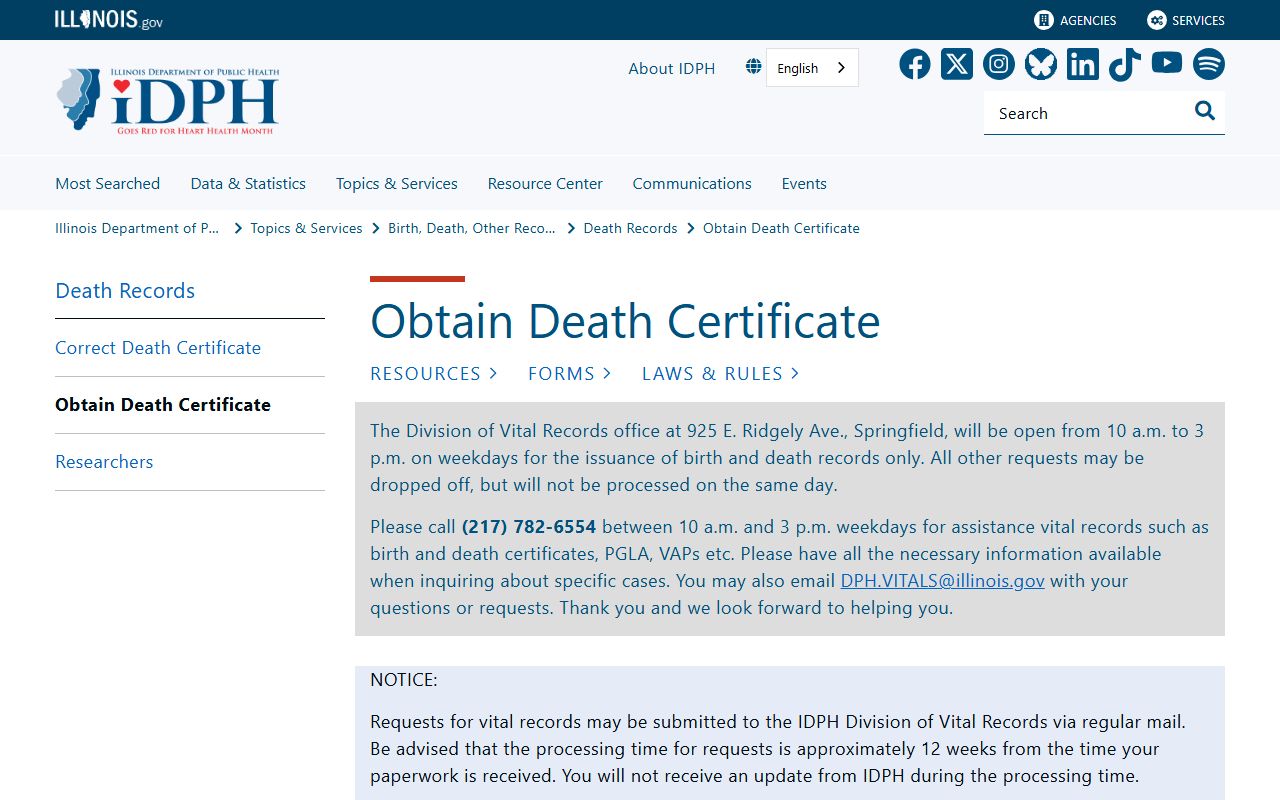
This covers records from 1916 forward at the state level. Franklin County records before that date must come from the local clerk in Benton or the IRAD depository at Southern Illinois University in Carbondale.
Franklin County Genealogy Access
The Vital Records Act (410 ILCS 535) sets the rules for when vital records open for genealogy in Franklin County and all of Illinois. Birth records become available 75 years after the birth date. Death records open after 20 years. Marriage records are available after 50 years. These time windows apply to every vital record the Franklin County Clerk holds. Genealogy copies get stamped as uncertified and cannot be used for legal purposes.
The Freedom of Information Act (5 ILCS 140) covers general public records in Illinois. Vital records follow the Vital Records Act instead, which takes priority over FOIA. If a record has not passed the time limit, only someone with a direct legal interest can get a copy. Once the limit passes, anyone can request it for family research.
- Franklin County Clerk: vital records, land files, and marriage records in Benton
- IRAD at SIU: historical records preserved in Carbondale
- Illinois State Archives: free marriage and death indexes online
- IDPH: statewide birth and death from 1916 forward
Nearby Counties
These counties border Franklin County in southern Illinois. If your ancestor lived near a county line, their records could be filed in one of these areas. Families in the coal mining region moved between communities often, so check the neighbors if you hit a wall.