
Bond County Genealogy
Bond County genealogy records are held at the county clerk's office in Greenville, where vital records, land documents, and court files date back to the county's early days in southern Illinois. The clerk at 200 W. College Ave manages marriage licenses, birth and death registers, and property filings for this area between St. Louis and Vandalia. Researchers who need older Bond County government records can also check the IRAD depository at the University of Illinois Springfield. Bond County sits at a crossroads in south-central Illinois, and families passed through often on the old National Road. Tracing genealogy here means working with both local and state-level sources to get a full picture.
Bond County Genealogy Quick Facts
Bond County Clerk Genealogy Records
The Bond County Clerk's office at 200 W. College Ave in Greenville is the main source for local genealogy records. Call (618) 664-0449 to ask about what they have on file. The clerk holds marriage licenses, birth and death records, and land documents. Bond County was formed in 1817, so the earliest records go back over two centuries. The Counties Code (55 ILCS 5) makes the county clerk the legal custodian for these files. That means the Greenville office is the first place to look when you need a Bond County vital record or deed.
Illinois birth and death registration started at the state level around 1916, but some Bond County records go back further. Early birth and death entries from the late 1870s may exist in the clerk's files. Marriage records tend to be the oldest and most complete. Bond County marriages from before 1900 are especially useful for genealogy because they predate most other official documents in this area. Each marriage record lists the names, date, and often the ages of the bride and groom.
Walk-in visits work best. The staff in Greenville can look up records while you wait. Mail requests are accepted too. Include the full name, approximate date range, what type of record you need, and a check for the search fee. Make checks payable to the Bond County Clerk.
| Office | Bond County Clerk |
|---|---|
| Address | 200 W. College Ave Greenville, IL 62246 |
| Phone | (618) 664-0449 |
Bond County Birth and Death Records
For Bond County birth and death records from 1916 onward, the Illinois Department of Public Health keeps statewide files. IDPH handles genealogy requests by mail. The cost is $10 per genealogy copy. Processing takes around 12 weeks. The Vital Records Act (410 ILCS 535) sets the rules on when records open up for genealogy research. Birth records become available after 75 years, death records after 20 years, and marriage records after 50 years.
The IDPH genealogy page shown below is where you start for statewide Bond County vital record requests through the state system.
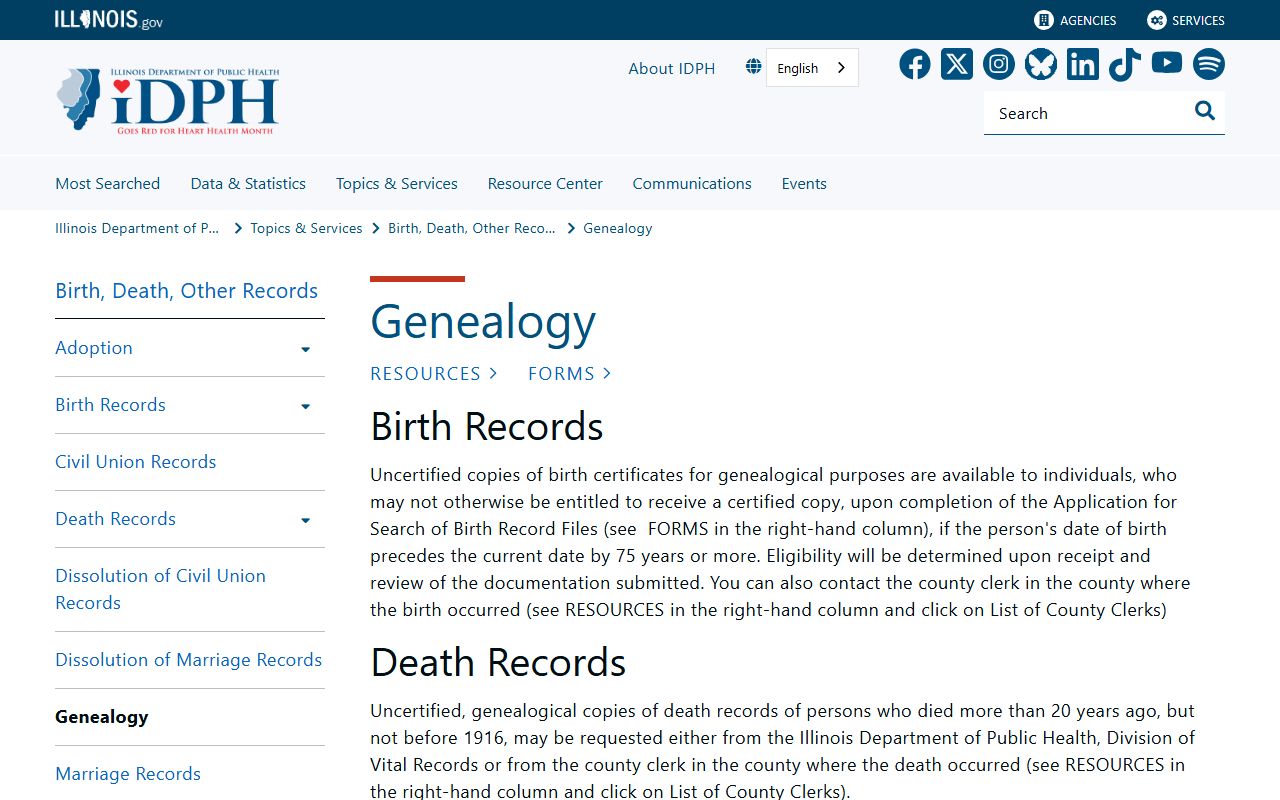
That page explains the mail-in process for genealogy copies from IDPH. These copies carry a genealogy stamp and are not valid for legal use. If you need a certified copy for court or identification, different rules and fees apply. For Bond County records before 1916, the county clerk in Greenville or IRAD at UIS are your best options since the state did not keep centralized files that far back.
Note: IDPH genealogy requests are mail-only and take about 12 weeks to process for Bond County records.
Bond County Records at IRAD
The IRAD depository for Bond County is at the University of Illinois Springfield. Call (217) 206-6520 to ask about Bond County holdings. IRAD stands for Illinois Regional Archives Depository, and it preserves older county government records that have been moved from the courthouse. For Bond County, this can include historical vital records, court case files, probate files, naturalization papers, and early voter lists. Research at IRAD is free. You can photograph documents at no charge. Staff take phone and mail requests but limit each one to two names per inquiry.
Check the IRAD holdings database before making a trip to Springfield. The online search tool shows what Bond County records are stored at UIS. The Local Records Act (50 ILCS 205) is the law that created the IRAD system. It requires that county records with lasting historical or research value be preserved instead of thrown out. That law is why old Bond County documents end up at the university archives rather than getting lost when courthouse space runs out.
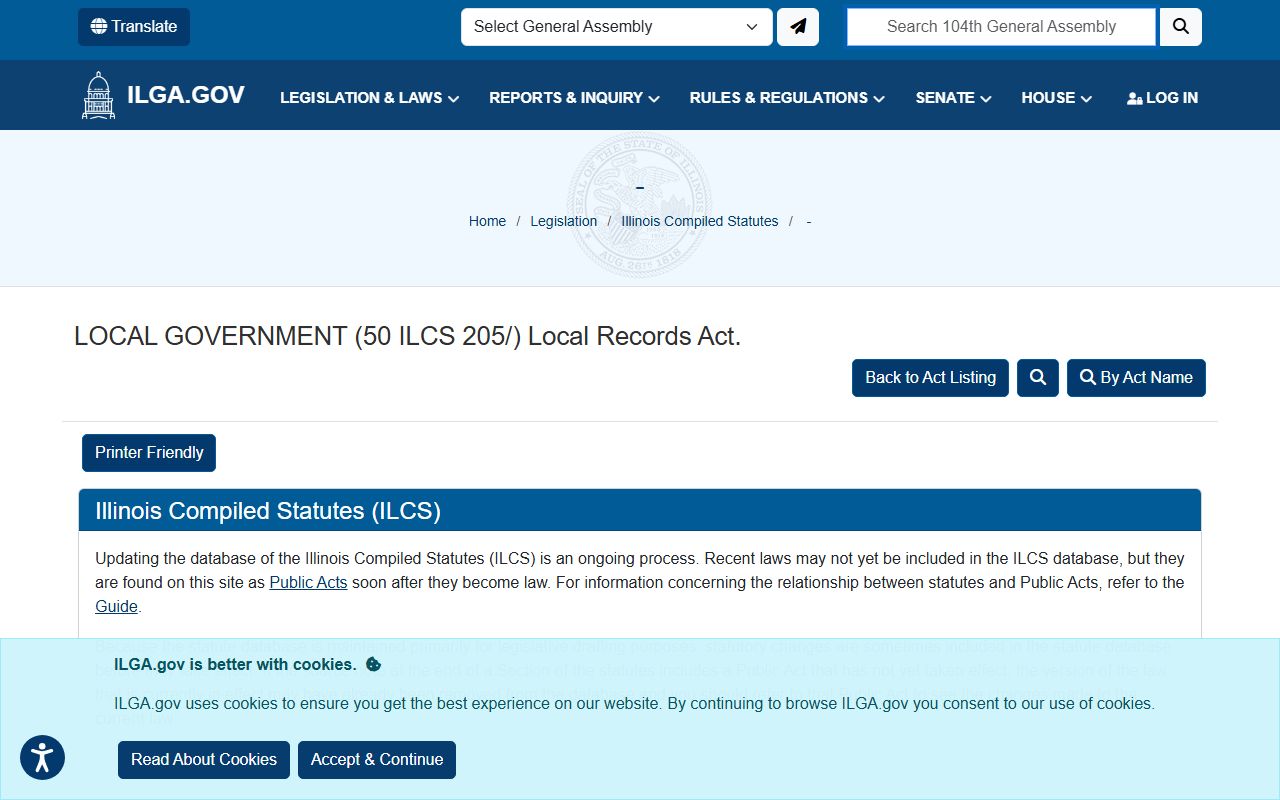
The Local Records Act shown above is the state law that protects Bond County's older government files. Without this law, many records from the 1800s and early 1900s would have been discarded long ago.
Searching Bond County Genealogy Online
The Illinois State Archives in Springfield has free online databases that include Bond County entries. The marriage index runs from 1763 to 1900. Death indexes cover the pre-1916 era and 1916 to 1950. These are good starting points for Bond County genealogy work from home. Search the indexes to get names and dates, then contact the Bond County Clerk or IRAD for the actual documents.
Bond County sits in the Fourth Judicial Circuit. Court records from this circuit can hold genealogy clues that vital records miss. Divorce files, estate cases, guardianship records, and land disputes all name family members and show relationships. The circuit clerk in Greenville handles court records separately from the county clerk. If you need old court files, ask at the courthouse or check with IRAD at UIS for transferred records.
- State Archives marriage index: 1763 to 1900
- State Archives death index: pre-1916 and 1916-1950
- IRAD at UIS: free research, two-name limit by mail
- IDPH genealogy copy: $10 by mail, about 12 weeks
- Bond County Clerk: walk-in or mail requests
The Freedom of Information Act (5 ILCS 140) applies to public records in Bond County, but vital records follow their own access rules under the Vital Records Act. Recent birth and death files are restricted to eligible applicants. Older genealogy-eligible records can be requested by anyone for family research.
Nearby Counties
Bond County is in south-central Illinois between St. Louis and Vandalia. Families in this part of the state moved between these neighboring counties regularly. If your Bond County search hits a wall, try the counties around it.